
May is Neurofibromatosis (NF) Awareness Month, a time to shine a light on a complex neurological condition that affects individuals and families across Western Australia and beyond. Increasing awareness helps build understanding, reduce stigma and ensure people living with NF know they are not alone. This article explores what neurofibromatosis is, how it can affect the body, and where to find trusted support - including Neurofibromatosis Association WA (NFAWA), a key source of information, resources and community events throughout May.
What is Neurofibromatosis?
Neurofibromatosis (NF) is understood as a group of related genetic conditions (or neurofibromatoses) that cause tumours to grow on nerve tissues in various parts of the body:
- Neurofibromatosis Type 1 (NF1): this type is caused by a change in a gene on chromosome 17 and affects around 1 in 3000 people in Australia. Around half of the people affected by NF1 will have inherited it from a parent.
- Schwannomatosis (SWN): this is an umbrella term that includes several subtypes, including NF2-related schwannomatosis, formerly known as neurofibromatosis type 2 (NF2).
The tumours associated with NF, which are usually neurofibromas or schwannomas, are most often benign, but can be cancerous in some cases or lead to serious health issues depending on their location, number and size.
Each type of NF carries its own specific symptoms, which can also differ from person to person.
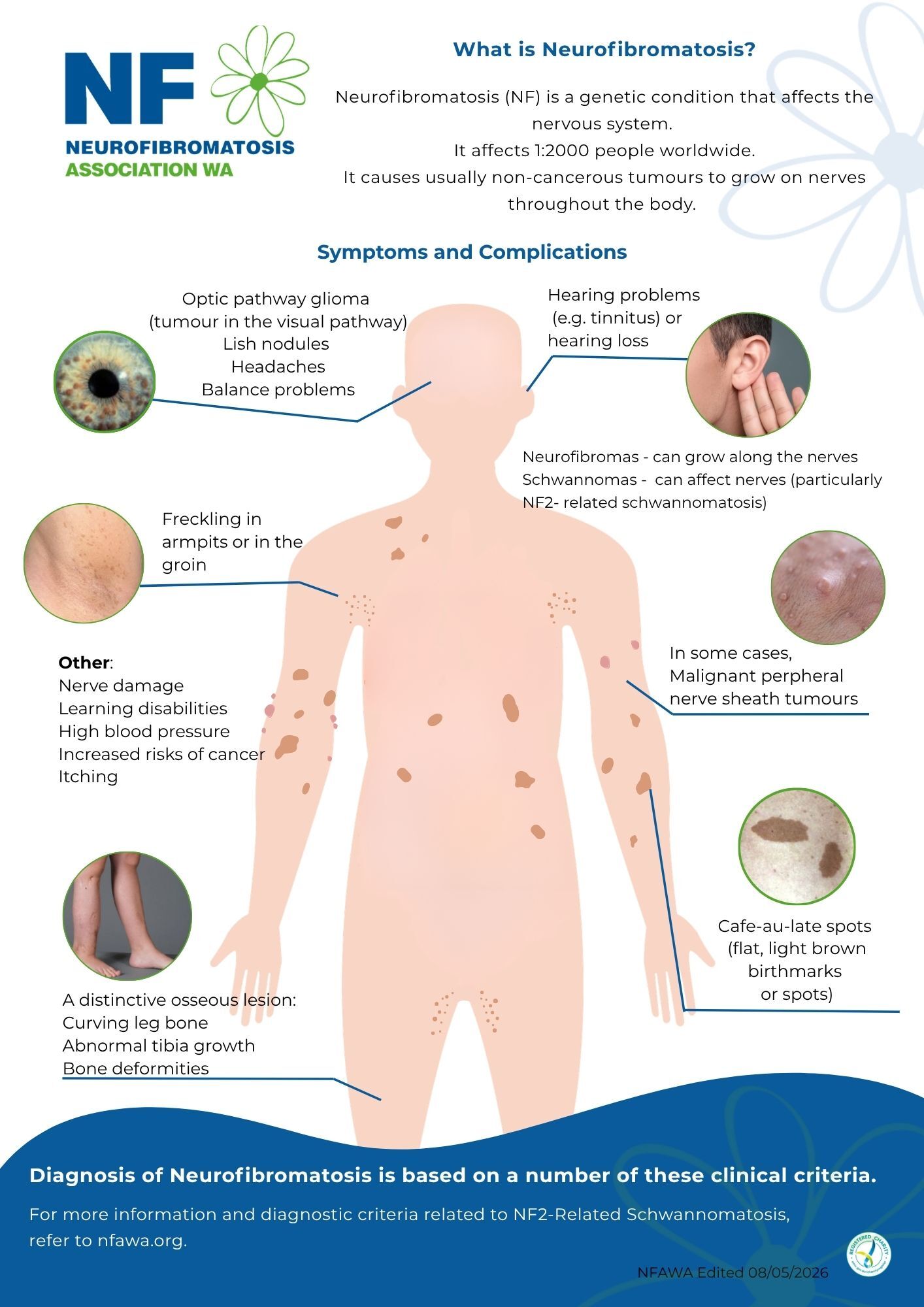
Symptoms of Neurofibromatosis Type 1 (NF1)
NF1 is the most common form of neurofibromatosis and can show a range of physical symptoms. These may include:
- Flat, coffee-coloured skin markings known as café au lait spots. These spots can be present on those without NF1, however people with NF1 tend to have 6 or more which develop before age 5.
- clusters of freckles appearing in areas such as the underarms or groin
- neurofibromas, which are usually harmless growths that often increase in number during adolescence and adulthood
- Lisch nodules, which are tiny spots on the coloured part of the eye (iris)
Symptoms of NF2-related Schwannomatosis
NF2-related schwannomatosis is associated with various types of tumours, including schwannomas, meningiomas and ependymomas. These tumours, which often develop on the nerves that control hearing and balance, can cause a range of neurological symptoms such as:
- Hearing loss
- Ringing in the ears (tinnitus)
- Balance problems or unsteadiness
- Headaches
- Vision problems (including cataracts)
- Muscle weakness
- Seizures (in some cases)
- Pain
Other Types of Schwannomatosis
Other forms of schwannomatosis are rarer and tend to affect the spine and peripheral nerves, with chronic pain being the most common symptom. Tumours can develop anywhere along the nerves, often deep within the body.
Common symptoms can include:
- Chronic pain, which doesn’t always match tumour size or location
- Numbness
- Tingling
- Weakness
- Headaches
- Vision changes
- Swelling or lumps under the skin
How is NF Diagnosed?
In Australia, neurofibromatosis is usually diagnosed through a combination of physical examination (looking for signs like café-au-lait spots or neurofibromas), imaging tests such as MRI or CT scans, genetic testing, eye exams and hearing tests.
What Treatments Are Available?
Neurofibromatosis has no cure, but there are ways to treat and manage the symptoms associated with the different types of NF. Regular checkups with knowledgeable healthcare professionals are essential to observing and managing symptoms, and genetic counselling may be helpful for individuals and families.
Physical or occupation therapy, hearing aids and implants, tinnitus retraining therapy and pain management through medication, acupuncture and behavioural approaches can be helpful for managing NF symptoms.
In some cases, there may be complications or concerns that need urgent assessment and treatment. Doctors may recommend surgery to treat certain tumours.
Living with Neurofibromatosis and Finding Support
Regular monitoring, as well as seeking understanding and support, are key to living well with NF.
Support groups can be a great way to find support and connect with other people and families affected by NF. Neurofibromatosis Association WA (NFAWA) is a valuable resource to anyone navigating NF, with links to various resources and a calendar full of social events across the Perth metro area and South West WA throughout the month. You can connect with NFAWA through their website, Facebook or Instagram.
The Neurological Council of WA also provides free neurological nursing and health system navigation support for people with NF, as well as their families and carers. Our NeuFriends support groups, held across metro and regional WA, offer a safe space to connect with others living with neurological conditions such as NF, or supporting someone who is. View our upcoming events or call the NeuroCare TeleNurse on 1800 645 771.