
From anatomy laboratories to world leading public health campaigns, to the most cited brain atlas in neuroscience, Emeritus Professor Charles Watson AM - Chairman of the Neurological Council of Western Australia - has spent more than five decades working across disciplines that rarely overlap. His influence has shaped major public health reforms, scientific understanding and now community neurological care in Western Australia. His leadership style is measured, relational and deeply curious, anchored by a belief that people thrive when they have the right support around them.
A Life of Many Pathways: The Power of Curiosity, Connection and Purpose
25 November 2025
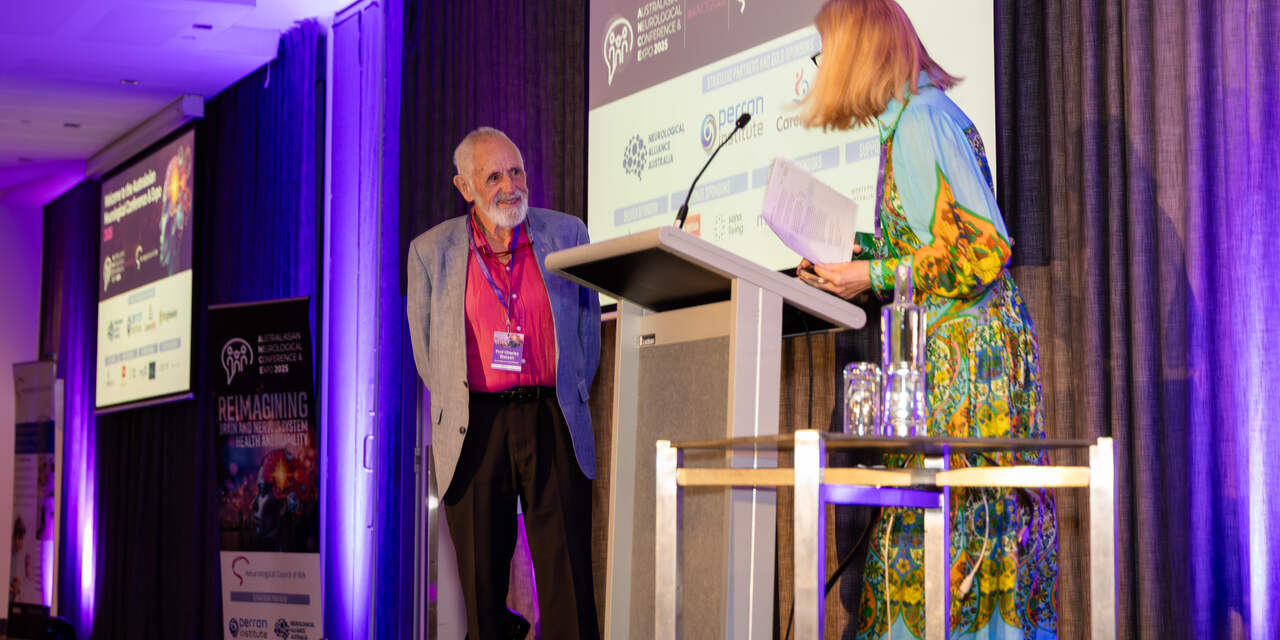
Seeing the Whole System
Across Charles Watson’s long career, it is the breadth and diversity of his work that stand out. He has moved between medicine, anatomy, neuroscience, public health, disease control and community health with an ease that few manage.
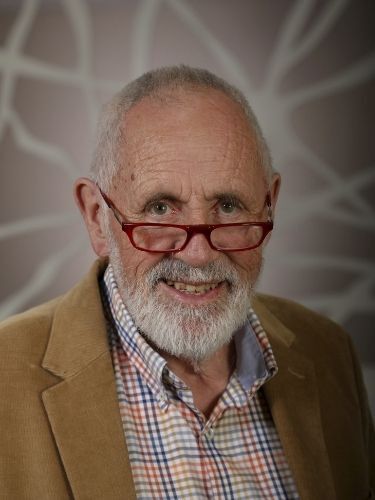
Emeritus Professor Charles Watson AM - Chair, Neurological Council of WA
Each step seems almost accidental when he describes it, yet together they have shaped his view of systems being interconnected, and people being central.
His father was a doctor, and although he does not describe it as a deliberate decision to follow in his footsteps, studying medicine felt like a natural path at the time. In his first year of university, he very nearly left medicine for biology, but a wise aunt encouraged him to complete the early units first. He did, and by the time he reached the clinical stage he realised medicine suited him after all. After his internship he took a job teaching anatomy, beginning what would become more than a decade of research and academic work.
His early scientific curiosity centred on the connections of the brain and the differences across species. That curiosity led him to co-create one of the most widely used resources in modern neuroscience. A colleague, George Paxinos, asked if he could photograph sections of the rat brain, and the technical work required pushed him into a long, painstaking collaboration.
“We took the pictures and he said, ‘This is fantastic. We could make an atlas out of this.’ That was the beginning.”
The result was the Rat Brain Atlas, an anatomical reference used around the world which has been cited around 130,000 times. It became a practical tool that shaped how researchers mapped and understood the brain.
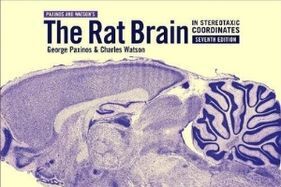
The Rat Brain in Stereotaxic Coordinates - George Paxinos, Charles Watson was first published 1982
During a period of study in Utah he worked alongside Mario Capecchi, whose discoveries in gene expression transformed modern neuroscience. Charles describes this time as sharpening his scientific thinking and exposing him to more rigorous approaches to experimentation. Around this same period, he also began a long collaboration with Spanish developmental neuroanatomist Luis Puelles. Puelles’s work on brain patterning influenced the direction of Charles’s publishing over the next decade.
Together these experiences introduced him to new conceptual frameworks and reinforced the value of testing his own assumptions, something he connects to Karl Popper’s advice about designing experiments that could prove you wrong rather than prove you right.
“Karl Popper said that if you believe one answer, you will design experiments to prove you are right. What you should do is design an experiment that could prove you wrong. That stayed with me.”
From Science to Public Health
The other major strand of his professional life began with a conversation. A colleague in Sydney introduced him to the idea that doctors were not well equipped to support people in changing health behaviours. Not long after, the Western Australian Government introduced a major tobacco tax which created a rare pool of funding for health promotion. A new position opened in Perth. He applied and found himself leading one of the most well-resourced public health campaigns in the world.
He grew a small team of 10 into a team of 85 and worked alongside experienced marketers who introduced a new level of technical expertise to health messaging. Iconic advertisements such as the sponge lung campaign emerged from this period. Community based health promotion officers were hired across Western Australia, grounding the work in everyday life rather than relying solely on mass media.
He later worked in HIV education, which brought him into contact with diverse communities and new networks of people and organisations. He helped introduce breast cancer screening and contributed to bicycle helmet campaigns before moving into disease control. His work also intersected with major legislative reforms of the 1990s, including the national response following the Port Arthur incident. For Charles, this period highlighted the importance of evidence, timing and clear communication when shaping public health policy. For a period, he served as the Chief Health Officer for Western Australia.
Across these shifts he did not see himself as a specialist so much as someone willing to respond to what was needed, learn quickly and bring the right people together.
Leadership Through People
When talking about leadership, Charles does not frame himself as a reformer. Instead, he highlights the importance of relationships and the responsibility to support others. He considers mentoring one of the most meaningful aspects of his career. Over the past 30 years he has identified dozens of people who were ready to take the next step and helped them find opportunities.
“You have to recognise talent when you see it. Often all people need is the right introduction or opportunity.”
Many have gone on to roles in medicine, neuroscience, research and public health. His mentoring stories are practical rather than sentimental. What he values is the simple act of helping someone move to where they belong.
He is also frank about the role of social connection in a well lived life. He attends a morning coffee group with up to fifteen people, and he sees it as important to wellbeing as any medicine.
“Social connection is one of the strongest determinants of wellbeing.”
For him, connection, shared support and problem solving are part of how communities function. It is not surprising that he sees navigation and coordination as essential in neurological care.
Understanding Neurology Beyond the Hospital
Charles has watched neurology from various angles over the decades. One observation has remained constant. For a long time, neurology was viewed almost entirely as a hospital specialty. People would see a neurologist, receive a diagnosis then leave the hospital to manage the rest of their lives on their own.
The community-based services required to help people live well with Parkinson’s, stroke, neuropathy, MND, chronic headache or any of up to six hundred known neurological conditions were either missing or disconnected.
He says this has shifted but not fast enough. One of the biggest challenges, he notes, is the lack of coordinated data about neurological conditions and the services people use. Without it, planning is difficult and opportunities for earlier intervention are easily missed.
“Neurological conditions are now the leading cause of disability, yet we lack the coordinated data needed for proper planning.”
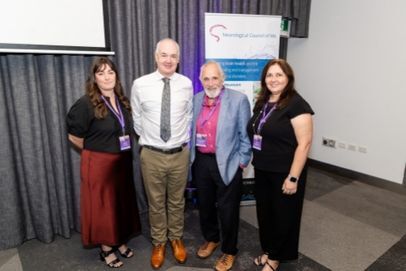
Emeritus Professor Charles Watson (3rd from right) at the Australasian Neurological Conference and Expo 2025 with (L to R) Dr Mhairi Cowden, Deputy Director General Disabilities, WA Department of Communities; Mr Rohan Greenland, CEO of MS Australia; and Etta Palumbo, CEO of the Neurological Council of WA.
As Chair of the Neurological Council of WA, Charles sees community neurological nursing as central to closing that gap. He believes nurses help people understand their condition, find the right services and stay connected. It is about helping people navigate what is available and make sense of a complex system.
This understanding aligns strongly with the Neurological Council’s NeuroCare, NeuroKids and NeuFriends programs, where people are supported with clinical knowledge, coordination and community connection.
Lessons From a Long Career
Several themes emerge when Charles reflects on his work.
One is that change often happens when someone sees an opportunity and steps into it. Another is the importance of grounding health in the community. Whether through health promotion officers, HIV partnerships or morning coffee groups, he views social networks as essential to wellbeing.
His reflections on learning and understanding extend beyond science. His years in research taught him that clarity often comes from returning to the same question and testing first ideas against new evidence. It is why Karl Popper’s advice about looking for what might prove you wrong, rather than what confirms your view, stayed with him. In recent years he has been memorising poems as a cognitive and reflective exercise, and he talks about it in similar terms, as a way of staying with something until its shape and intention become clear.
“When you learn a poem by heart, the meaning becomes clearer. It is only obvious once you know it inside out.”
This emphasis on deep engagement, whether with scientific questions, public health problems or the words of a poem, underpins the way he thinks about systems and people. It reflects a belief that genuine understanding requires patience, attention and a willingness to sit with complexity rather than rush to conclusions.
Perhaps the strongest lesson is that systems improve when people can find their way through them. Neurological conditions require more than clinical expertise. They require connection, coordination and ongoing support. Charles’s career has woven these threads together, giving him a perspective that is wide rather than narrow.
A Reflective Kind of Influence
Charles remains deeply engaged in his work and interests, continuing to swim, walk, complete cryptic crosswords and learn new material by heart. These habits reflect the same curiosity and discipline that shaped his career.
As Chair of the Neurological Council of Western Australia, he brings steadiness, perspective and deep experience. His approach is grounded in relationships and an understanding of how different parts of the health system connect. His influence comes from breadth, patience and the way he helps others find clarity and direction.
His leadership offers continuity at a time when neurological care is evolving across the state. It is a reminder that progress often comes from those who work across boundaries, understand context and help people come together to move forward.