
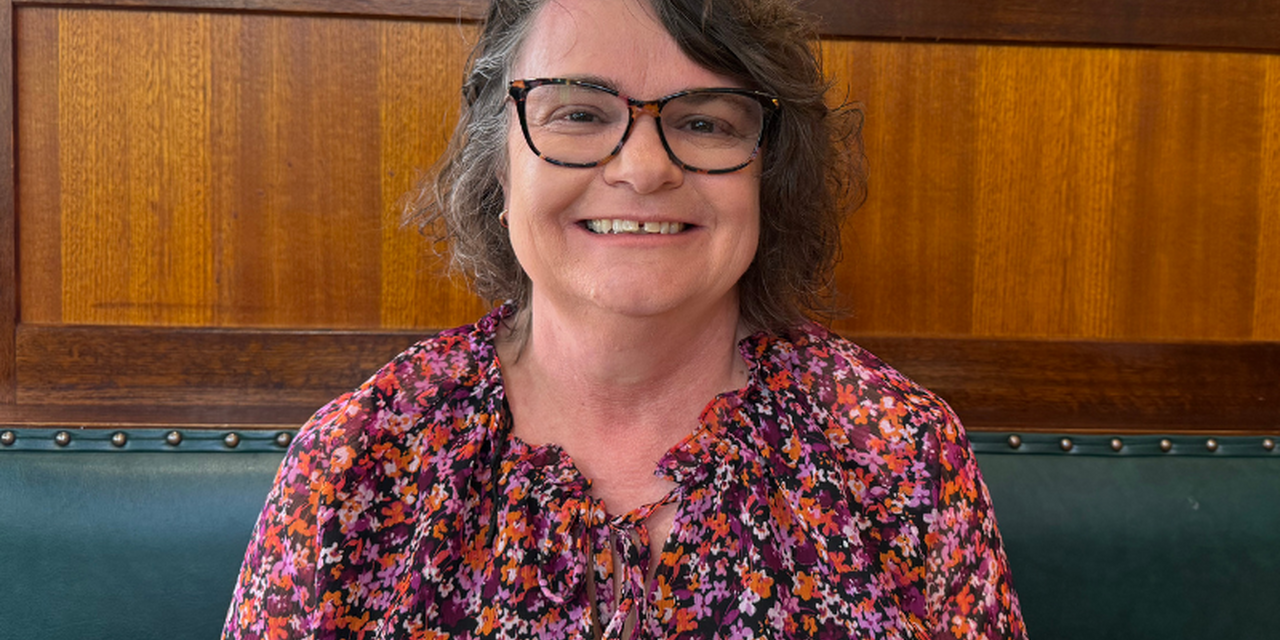
Andrea doesn’t sugar-coat life with Functional Neurological Disorder (FND). She meets it with practicality, humour and a healthy dose of grit. “You learn to manage what you can,” she says. “I map my week, build in rest, and try not to waste hours doing nothing. If I pace myself, I do better.”
Her diagnosis in 2019 followed a long and confusing stretch of symptoms that mimicked other conditions but didn’t quite fit. “I’d been really healthy and active, exercising a lot,” she recalls. “Then my body just started slowing down. My speech changed, sometimes I couldn’t find words at all. People thought I was drunk, that was awful because I couldn’t explain.”
After months of uncertainty, Andrea ended up in hospital, where she was tested for stroke and other neurological conditions. “They did scans and tests, but nobody could tell me what was wrong,” she says. When no clear diagnosis came and her symptoms remained, she went home. “It was frightening, but also frustrating. I felt like I was stuck in limbo, so I left and went back to my GP.”
Her GP was a lifeline and stayed closely involved, ordering more investigations and eventually suspecting a post-viral neurological issue. “She told me I might have had a virus that affected my body,” Andrea says. “There was a long wait for a neurological appointment, but I said, no, my family needs me, I need an answer now.”
In November 2019, she saw a neurologist who confirmed the diagnosis: Functional Neurological Disorder. “He said it was a mild, post-viral case and that I should be over it by January,” she says. “That was scary — mild didn’t feel mild when I couldn’t read, write, drive or talk properly.”
The months that followed were about rebuilding. With her GP’s support, Andrea found a physiotherapist familiar with FND. “He was excellent,” she says. “He watched how I stood up, walked and sat down, then explained what was happening in my nervous system. It wasn’t about pushing through — it was about helping my brain stop sending the wrong signals.”
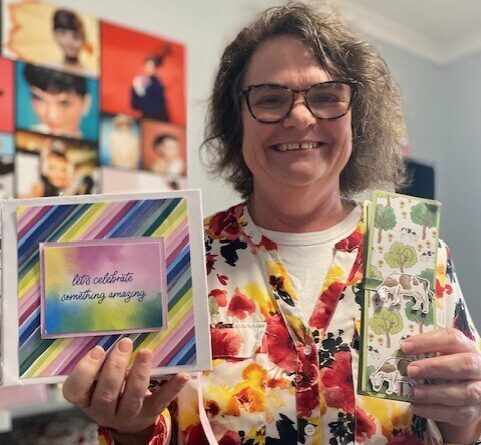
Progress was slow but steady through 2020 and 2021. She worked with a speech pathologist, did balance exercises and learned to pace her day. “I used to read a book in a day. It took time to get back into reading,” she says. “When I finally finished a book, I celebrated.” Creative therapy has helped too. “Two of my friends encouraged me to start art and card-making sessions at my house. That really built my confidence and has given me a lot of satisfaction.”
Practicality guides her choices. “Noise and heat flare me,” she says. “So, I plan my errands carefully and I chose a car with safety features that help keep me alert. It helps me stay confident and independent.”
That independence matters because Andrea is a mum and a carer for both her mother and sister. Her son Cody, a constant ray of sunshine and support, helps her keep perspective. “My son gave my flares a nickname — ‘the silly goose’ — so we can talk about it without fear,” she says. “He’ll say, ‘Mum, has the silly goose flown in today?’ and it keeps it light.”
Eventually Andrea returned to work in a busy public-facing role, thriving on the daily interaction. “I loved it, people, noise, movement. Even quick conversations made my day.” She stayed there for three and a half years, picking up awards and the respect of her managers. When workplace changes and stress triggered another flare-up, Andrea’s health declined and she eventually had to leave the job she loved. “It was hard,” she says. “But I’ve learned to rebuild when things change — to step back, make a new plan, and keep going.”
Finding the Neurological Council of WA was another turning point. “I called and even on the phone I felt acknowledged,” Andrea says. “Someone understood and said there is support.”
Through the NeuroCare Community Neurological Nursing service, a nurse visited Andrea at home, first Deirdre, then Sue after she joined the team. “When they said a nurse would come to my house, I just thought, wow!” Andrea says. “To have someone actually come and see how I live — not just talk over the phone or rush through an appointment — that meant the world. They didn’t try to ‘fix’ FND. They asked, ‘What would make life safer and easier right now?’
Those visits led to practical changes: grab rails in the shower, an ACROD parking permit, and advice about advocacy and financial supports. “If they didn’t know something, they researched and came back to me,” Andrea says. “That made me feel held.”
The NeuFriends Neurological Support Group has helped with another kind of isolation, both the kind that comes from being home a lot because symptoms make everyday activities harder, and the kind that comes from feeling like no one else understands. “At first I thought I was the only one,” Andrea says. “At NeuFriends I’ve met people who get it, including others with FND. We share stories and swap tips. Even if our conditions are different, we learn from each other.”
Andrea says the love and encouragement of her family and friends have been central to how she manages her condition. “They’ve stood by me and I couldn’t do it without them.”
Through the support of her physiotherapist, chiropractors and others at the NeuFriends group, Andrea built a daily structure that works for her energy levels. “I finally had headspace to write a realistic routine,” she says. “Morning exercises, drink water, rest, then a couple of tasks. I even put reminders in my phone. It sounds simple, but it works.”
Andrea’s approach is part science, part common sense. She journals, practises gratitude and uses ‘body doubling’ by calling a friend while she gets started on tasks. “It gives me company without having company,” she says. “We talk while I fold washing or pay bills. It keeps me going.” Craft is therapy too. “Cardmaking calms me. It focuses my mind. I love making things for friends.”
Her advice for others newly diagnosed is calm and straight-talking. “Don’t take it too personally. Find a GP who really listens and do proper research — not just Dr Google. Reach out, because support groups matter. Try things, see what helps, and keep the people who lift you. Let go of the ones who don’t.”
Andrea knows that FND is complex, involving both the brain and body in ways that science is still uncovering. “There’s no single cure, so you build your supports.
NeuroCare helped me do that, and NeuFriends helped me feel less alone.”
She grins, eyes bright with humour and determination. “And when the silly goose turns up, you take a breath, laugh if you can, and start again.”